Foundation Piles: Types, Capacity, Selection
Driven, bored, CFA and screw piles compared. What each method does, when it works, and what it costs.
Types of Foundation Piles
Foundation piles transfer building loads to soil layers deeper than the surface can carry. Four main types: driven, bored, CFA, and screw piles. Selection depends on soil, schedule, and budget.
Foundation piles, pile foundations, piling foundations, foundation piling, steel foundation piles, deep foundations, helical piles, screw piles, driven piles, bored piles.
Driven Piles
Steel or concrete sections hammered into the ground by impact or vibratory force. Good in dense soils. Noisy, vibration-producing, needs heavy rigs.
Bored / Drilled Piles
Hole drilled, reinforcement cage inserted, concrete poured in place. Suitable for very heavy loads. Needs concrete curing, spoil removal, large equipment.
CFA Piles (Continuous Flight Auger)
Auger drills to depth, concrete pumped through the hollow stem as the auger withdraws. Good capacity. Needs concrete, heavy rigs, and curing time before load-bearing.
Screw Piles (Helical Piles)
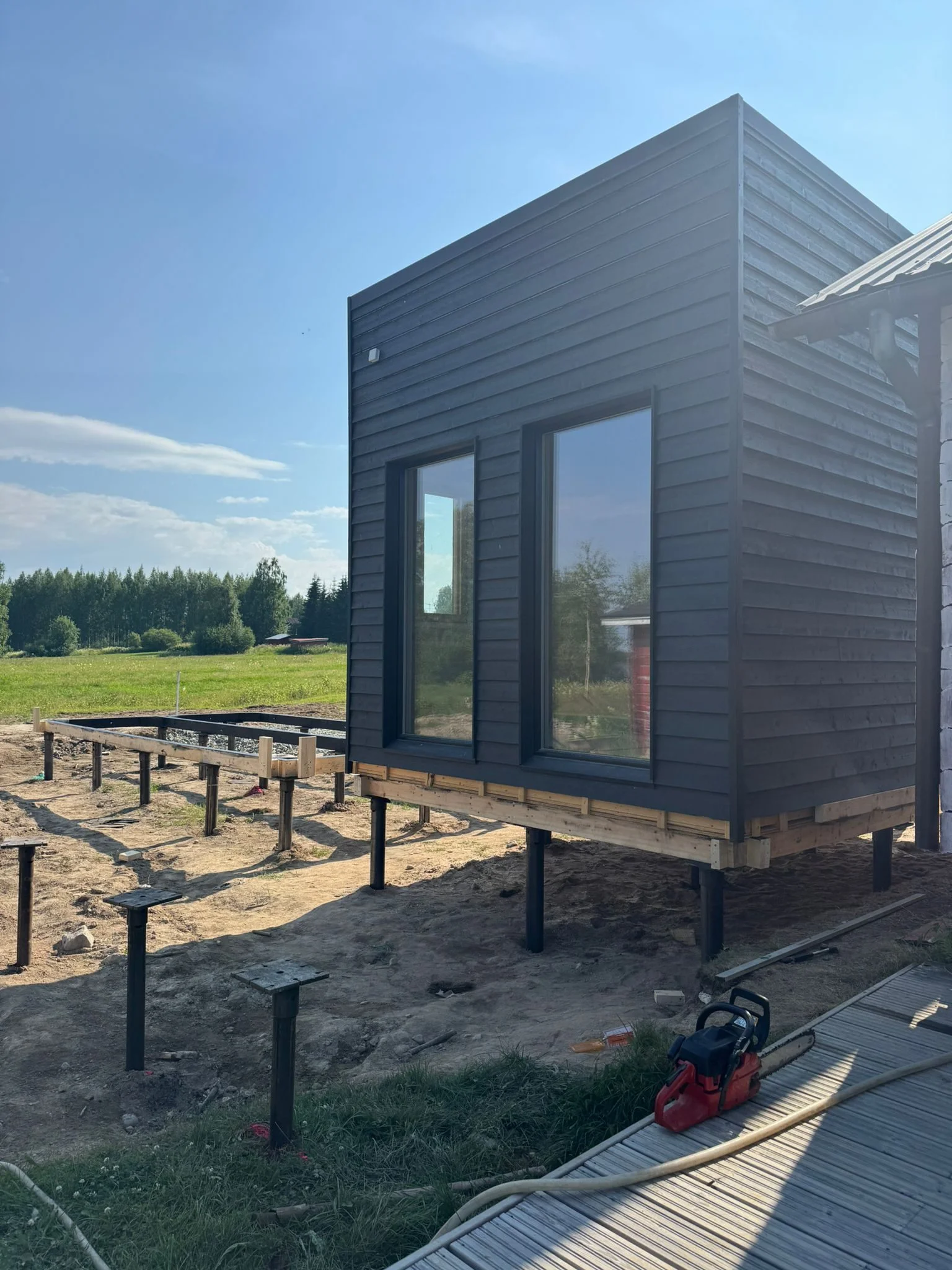
Steel shaft with helical bearing plates, rotated into the ground by an excavator-mounted drive head or a handheld drill. No concrete, no excavation, no curing. Carries load immediately. Fully removable and recyclable.

Where screw piles outperform driven, bored, and CFA
Six measurable differences when comparing screw piles to concrete-based piling methods.
No Excavation Required
Piles rotate into the ground. No digging, no spoil, no backfill. Site stays clean.
No Concrete Curing
Steel carries load immediately. No 7 to 28 day wait for concrete to reach strength.
Works on Difficult Soils
Clay, peat, sand, fill. The helix plate anchors into the bearing stratum at depth. Torque verifies capacity at each pile.
Year-Round Installation
No weather window. Installs in summer heat and winter frost.
Lower Project Cost
No frost insulation, no drainage, no formwork, no curing. Fewer trades on site.
78% Less CO₂
No concrete pour eliminates the largest carbon source in conventional foundations. 100 % steel, removable, recyclable.
Where Screw Pile Foundations Are Used
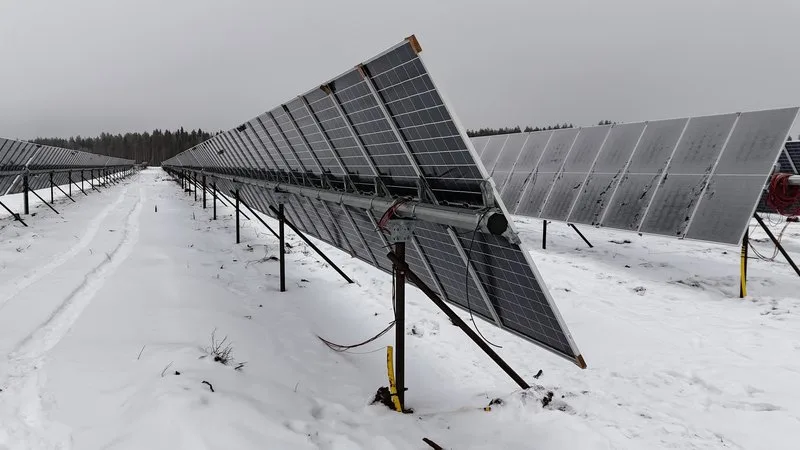
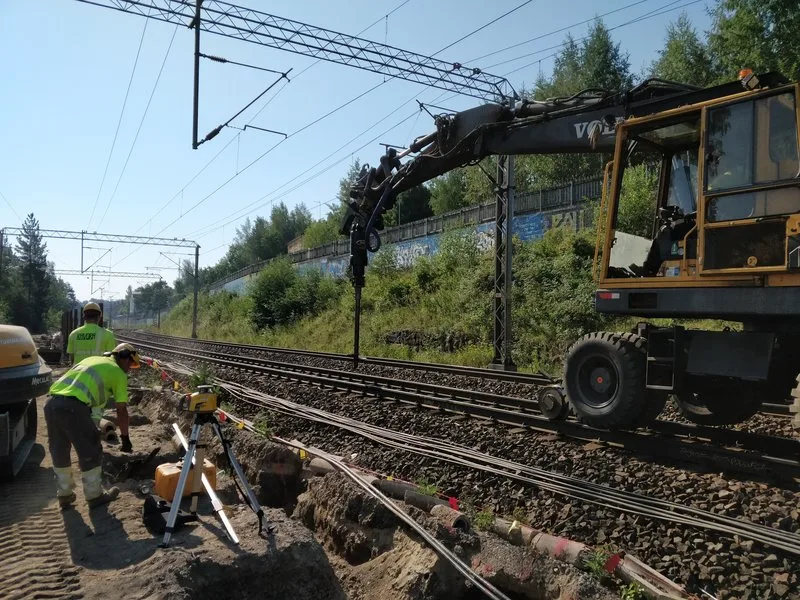
From garden decks to utility-scale energy projects, screw pile foundations work across every sector.

Learn More About Foundation Piles
Frequently Asked Questions About Foundation Piles
Foundation piles are structural elements installed deep into the ground to transfer building loads to stronger soil layers below the surface. They are used when the top layer of soil is too weak or compressible to support a structure directly.
The four main types are driven piles, bored (drilled) piles, CFA piles, and screw piles (helical piles). Screw piles are the fastest to install and the only type that requires no concrete, no excavation, and no curing time.
Driven piles are hammered into the ground using impact or vibratory force. They work well in dense soils but produce significant noise and vibration.
Bored (drilled) piles are created by drilling a hole, inserting a reinforcement cage, and pouring concrete. Used for very heavy loads but require large equipment, spoil removal, and curing time.
CFA piles (Continuous Flight Auger) use an auger that drills to depth while concrete is pumped through the hollow stem as it withdraws. Good capacity but dependent on concrete.
Screw piles (helical piles) are steel piles with helical bearing plates, screwed into the ground with an excavator or hand drill. No concrete, no excavation, immediate load-bearing, fully removable and recyclable.
Pile foundation costs vary by type, soil conditions, required depth, and project scale. Traditional concrete foundations include costs for excavation, formwork, reinforcement, concrete supply, frost insulation, drainage, and curing time - plus the lost schedule days.
Screw pile foundations can reduce total foundation cost by up to 50%. The savings come from eliminating excavation, concrete, frost insulation, and drainage. Fewer work phases mean fewer subcontractors and fewer invoices. The faster timeline also reduces overall project carrying costs.
Contact us for a project-specific estimate.
Pile foundations are needed when the surface soil cannot safely support the structure. Common situations include:
• Soft or compressible ground (clay, peat, organic soil, loose sand)
• High water table or flood-prone areas
• Heavy structural loads that exceed shallow foundation capacity
• Structures subject to uplift or lateral forces (solar panels, masts, noise barriers)
• Sloped or uneven terrain
• Projects where speed is critical and concrete curing is not acceptable
It depends on the pile type. Concrete-based piles (bored, CFA) cannot be poured when temperatures drop below freezing, as concrete curing requires controlled conditions. Driven piles can be hammered in winter but require mobilisation of heavy equipment.
Screw piles are the best option for winter installation. Because they use no concrete, frozen ground and cold temperatures do not prevent work. The steel pile is simply screwed into the ground, and load-bearing begins immediately. Paalupiste screw piles are installed year-round across the Nordics, including in sub-zero conditions.
Installation method: Screw piles are rotated into the ground using torque. Driven piles are hammered in using impact or vibratory force.
Noise and vibration: Screw piles produce minimal noise and zero ground vibration, making them safe near existing buildings and in residential areas. Driven piles create significant noise and vibration that can damage nearby structures.
Load direction: Screw piles resist both compression and tension (uplift) loads thanks to their helical bearing plates. Driven piles primarily resist compression and have poor uplift resistance.
Material efficiency: Screw piles use less steel per pile because the helix reaches bearing capacity at shallower depths. Driven piles in loose soils often need to be longer to achieve the same capacity.
Removability: Screw piles are fully removable by reversing rotation, and can be reused. Driven piles are permanent and destructive to extract.